‘Tow Rooms’
Dooee Jeong & YoungJoo Lee
25.04–09.05.2015
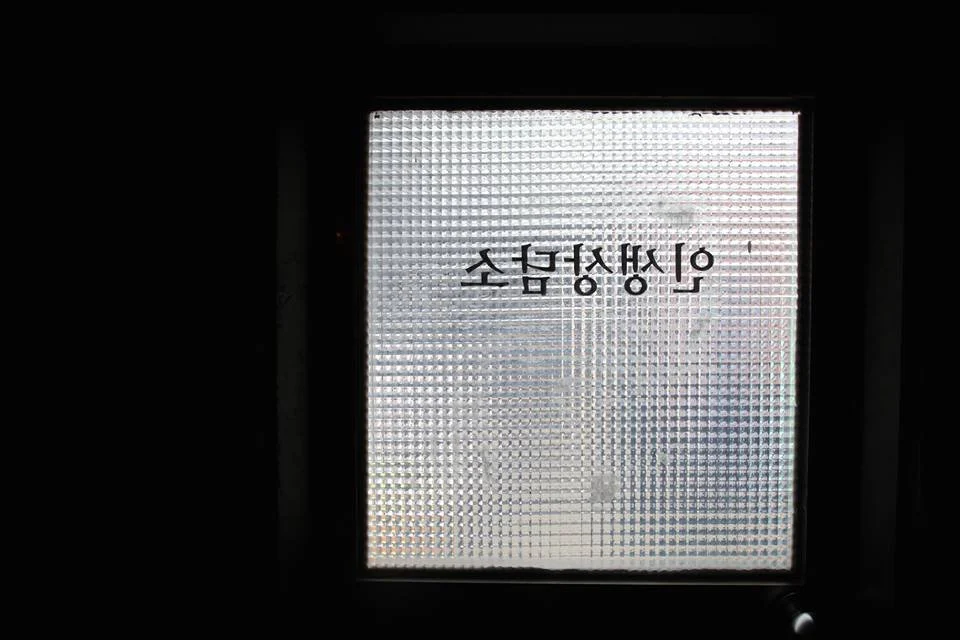
Space One presents Two Rooms by Dooee Jeong and Youngjoo Lee. The two artists create a narrative within each room, animating the space and the surrounding banal objects to affect direct and indirect encounters. The sense of reality, dream and the unconscious overlap as one enters the space, oneself and others.
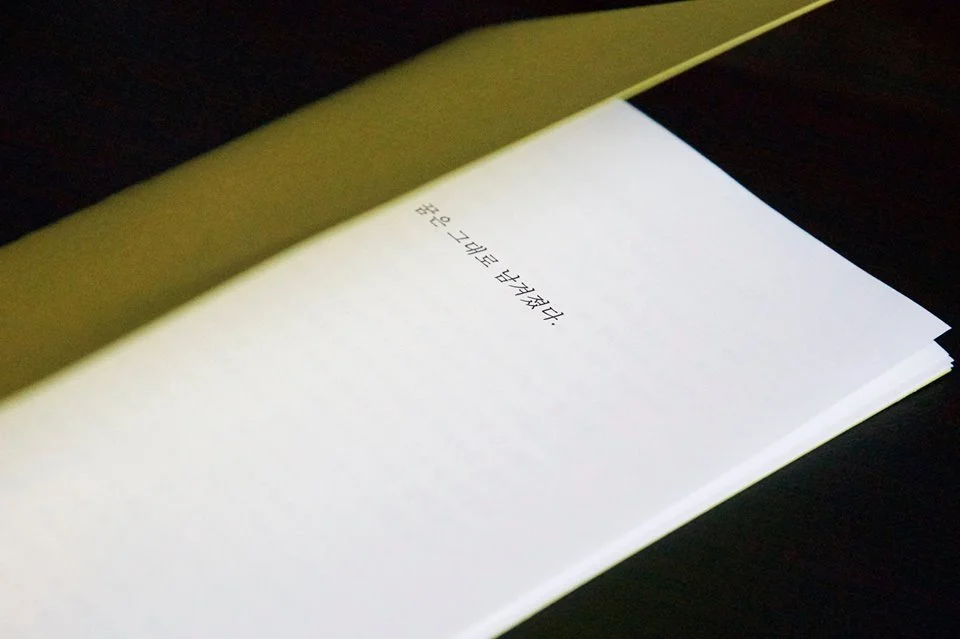
In Dooee Jeong's ‘Dreams left unexplained’, the viewers submerge in the act of reading. They return to reality unaware of certain changes having taken place. Similarly, the viewer experiences the art only to return again; the work exists in the hovering, hazy and weightless fantasies arising from this immersion.
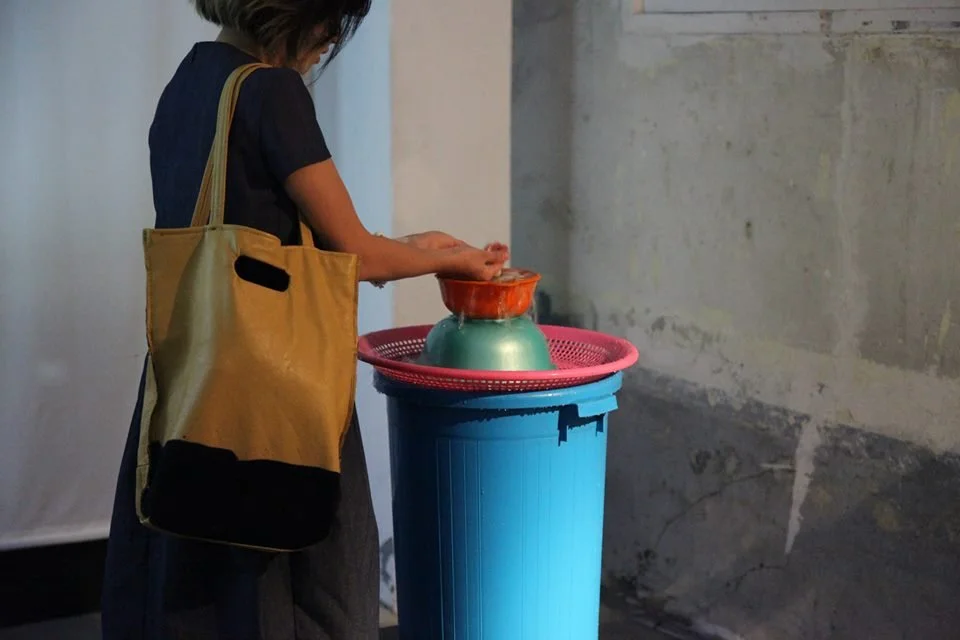
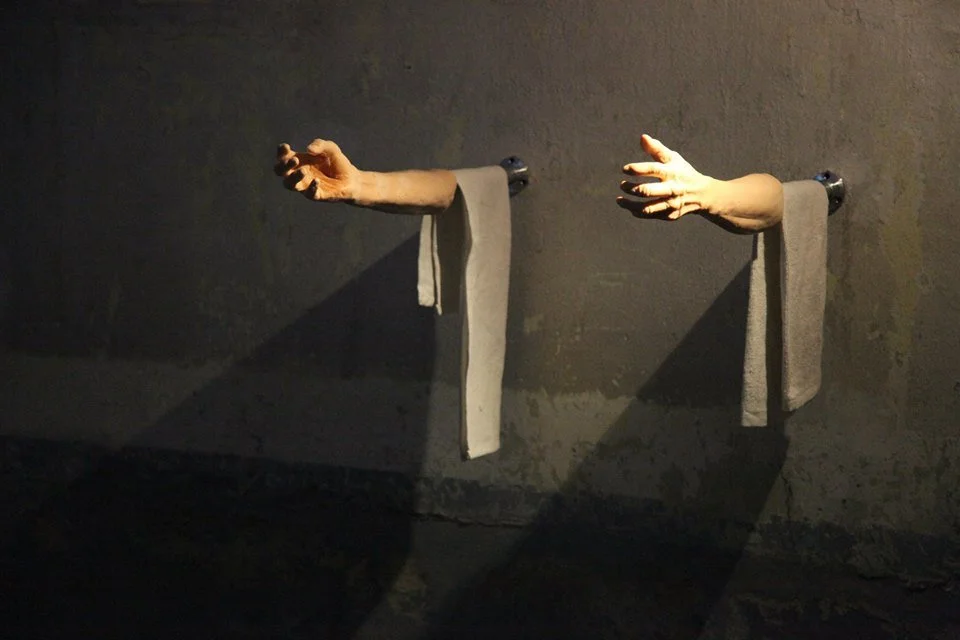
Youngjoo Lee’s ‘Weathering’ is a cycle of unconscious encounters. If there is such a thing as a commonplace one-time connection, it may be with a soap bar in a public toilet. People are often not alert to the daily connections made with the mundane, and their consequences. The Other seems to exist somewhere between oneself and the other individual- it is the medium that connects the two.
Artist Intro:
Dooee Jeong graduated from both the School of the Art Institute of Chicago, and Slade School of Art. She has been working as a curator and an artist in Seoul, Korea for the last five-years and more. Jeong sees the institution of exhibition itself as a substance of her work: for her, art is closer to experiencing time and the imaginary, and she conveys fantasy through story, image and performance.
Youngjoo Lee received her BFA in Painting from Hongik Arts University, Seoul, Korea, and then her Meisterschülerin in Film from HfbK Städelschule, Frankfurt, Germany. Myths, dreams, reality and virtual reality have been consistent themes in Youngjoo Lee’s artistic practice. These themes are retold in visual and auditory languages, such as video, performance and drawing. Recently, the artist has been working with the psychological aspect of the human mind in a restricted space and time; in addition to the transformation of identities of an individual or group according to the culture and time to which one belongs.